Synthesizers, often simply referred to as synths, are electronic musical instruments capable of generating a vast and diverse range of sounds. From the haunting melodies of a theremin to the pulsating rhythms of techno, the synthesizer has revolutionized the music industry and it continues to push the boundaries of sonic exploration.
A Journey Through Time: The Evolution of Synthesizers
The story of synthesizers begins in the early 20th century with experimental instruments like the Telharmonium and the Ondes Martenot. However, it wasn’t until the 1960s that synthesizers began to gain prominence in popular music, thanks to pioneers like Robert Moog and Don Buchla. Their modular synthesizers, with their patch cables and knobs, allowed for unprecedented control over sound creation.
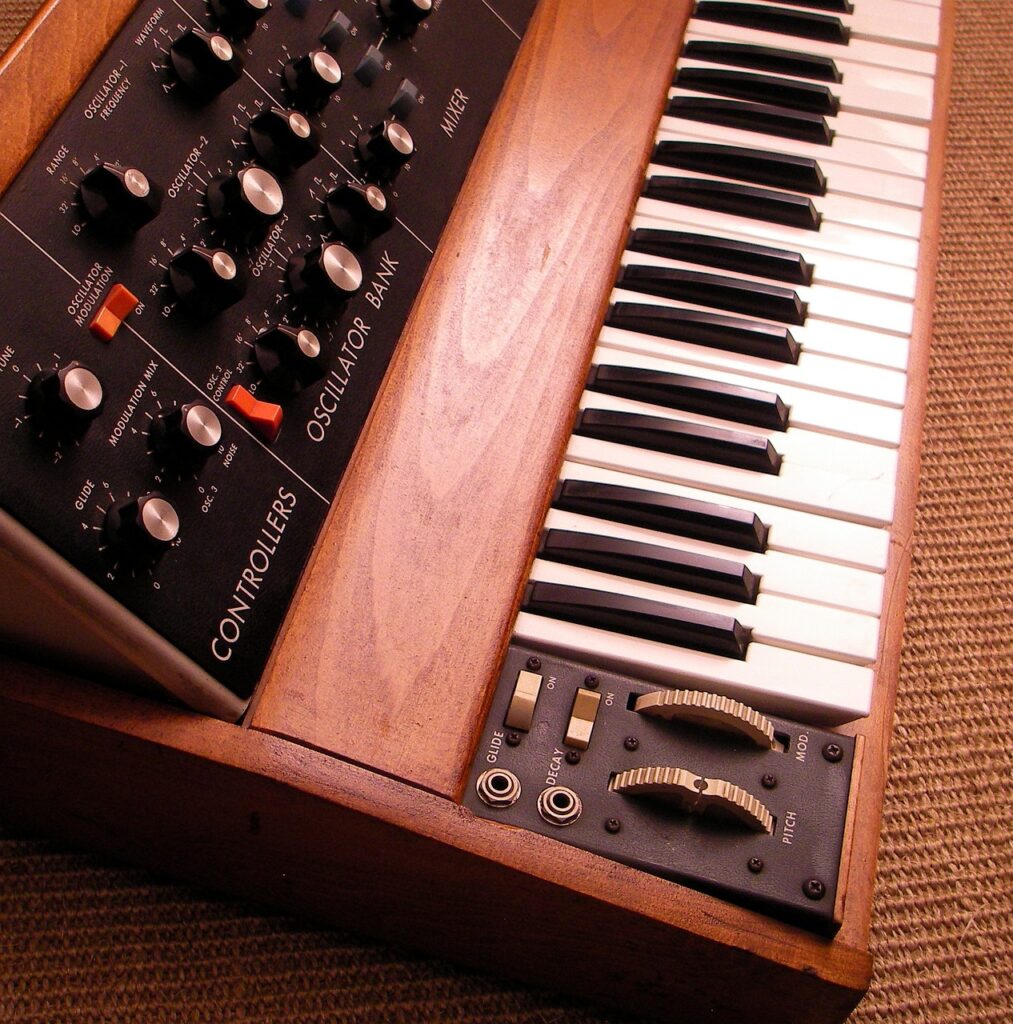
The 1970s saw the rise of iconic synthesizers like the Minimoog and the ARP Odyssey, which became staples in progressive rock and funk. Subsequently, the 1980s brought about the advent of digital synthesizers like the Yamaha DX7, known for its bell-like tones and FM synthesis technology. The 1990s and 2000s then saw the rise of software synthesizers and virtual instruments, making synthesis accessible to a wider audience.
Types of Synthesizers: A Spectrum of Sonic Possibilities
- Analog Synthesizers: These utilize analog circuitry to generate sound, producing warm, organic tones that many musicians find appealing.
- Digital Synthesizers: Leveraging digital signal processing (DSP), these synths offer a wider range of sounds and effects, often with greater precision and control.
- Hybrid Synthesizers: Combining the best of both worlds, hybrid synths incorporate analog and digital components to create unique and versatile instruments.
- Software Synthesizers: Also known as virtual instruments or soft synths, these run on computers or mobile devices, providing a cost-effective way to access a vast library of sounds.
Anatomy of a Synthesizer: Building Blocks of Sound
- Oscillators: These are the heart of a synthesizer, generating the raw waveforms (sine, triangle, sawtooth, square) that form the basis of a sound.
- Filters: They shape the sound by removing or emphasizing specific frequencies, creating everything from mellow pads to piercing leads.
- Envelopes: These control how a sound evolves over time, determining its attack, decay, sustain, and release (ADSR).
- LFOs (Low-Frequency Oscillators): These modulate various parameters at a slow rate, adding vibrato, tremolo, and other cyclical effects.
- Effects: Reverb, delay, chorus, distortion, and other effects enhance the sound and add depth and character.
Synthesizers in Action: From Studio to Stage
Synthesizers have found their way into virtually every genre of music, from electronic dance music (EDM) and pop to rock, jazz, and even classical. Moreover, they are used in film scoring, sound design for video games, and experimental music. Live performers use synthesizers to create lush soundscapes, driving rhythms, and soaring solos.
The Future Soundscape: Synthesizers in the 21st Century
As technology continues to advance, so too does the world of synthesizers. We can expect to see even more sophisticated instruments with enhanced capabilities for sound creation and manipulation. Furthermore, virtual reality and augmented reality may even play a role in the future of synthesis, offering new and immersive ways to interact with sound.
In conclusion
The synthesizer is a versatile and powerful instrument that has played a pivotal role in shaping the sound of modern music. Whether you’re a seasoned producer or a curious beginner, exploring the world of synthesizers is an exciting journey into the realm of electronic sound alchemy.